Practice Management and Accounting Software: What Each Does and Why Thai Firms Need Both
When a boutique Thai professional services firm starts evaluating software, the question usually arrives in the wrong frame. The firm asks whether it needs accounting software or practice management software, as if the two categories compete. They do not. They solve different problems for different parts of the firm’s operation, and a firm that understands the distinction can stop searching for the one tool that does everything and start building a system where two complementary tools each do their job well.
What Accounting Software Is Actually For
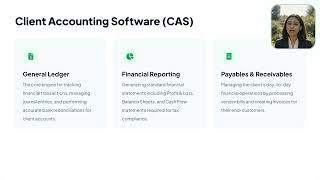
Accounting software in the Thai market, including FlowAccount and PEAK, is built around a specific relationship: the relationship between a business and the Revenue Department. These tools handle the local compliance layer that Thai businesses need: e-Tax invoice submission, VAT reporting, withholding tax calculation, and bank feeds from Thai financial institutions.
This is genuinely difficult software to build. The Revenue Department’s e-Tax system, the specifics of Thai VAT categories, the withholding tax rates for different service types, and the structure of Thai financial reporting are all particular to the Thai market. FlowAccount and PEAK have invested heavily in making these things work correctly and reliably. They are good at what they do.
The revenue cycle that these tools manage runs from invoice creation to payment receipt to financial reporting. An invoice is raised, sent to the client, matched to a payment, and recorded against the right account. The accounting software holds the official financial record of the firm, produces reports for tax purposes, and connects to the tools the auditor or Revenue Department requires.
What accounting software does not do is manage the sequence of events that leads up to an invoice being raised. It does not track which client said what in a meeting three weeks ago. It does not record which documents are outstanding on a matter. It does not run a conflict check when a new client comes in. It does not know whether the fee earner spent two hours on a matter or four. These things happen before the invoice, and they happen in a different system.
What Practice Management Is For
Practice management software sits on the client-facing side of the firm’s operation. Its domain is the client relationship, the matter lifecycle, and the work that generates a bill before that bill is created.
At the intake stage, practice management handles the onboarding of a new client: the structured collection of client details, the conflict check against existing relationships, and the creation of the client and matter record. This is the beginning of a matter, and it is where the quality of the firm’s records is established.
Through the matter lifecycle, practice management tracks what has been discussed, what has been agreed, what documents are in progress, and what the fee earner has spent time on. The meeting summary, the action items, the billing log entry, and the CRM interaction record are all part of this layer. The fee earner works within the practice management system to capture the substance of their client work.
At billing time, practice management produces a billing log: a structured record of the time and work recorded against the matter. This is the input to the invoice. The billing log tells the accounting software what to charge; the accounting software creates the compliant invoice and sends it.
The Gap Most Thai Firms Are Actually Experiencing
When a boutique Thai firm says its systems are not working, the problem is almost never in the accounting software. FlowAccount or PEAK is probably handling invoicing and tax reporting adequately. The problem is in everything that happens before the invoice is raised.
The gap shows up in recognisable ways. Notes from client meetings live in email threads or personal notebooks rather than in a shared matter file. New client onboarding takes three days and involves multiple email exchanges for a PDF intake form. Time recorded against a matter is reconstructed from memory at the end of the week, and some of it is never recorded at all. When a fee earner is out of the office, a colleague picking up a matter has to read through email history to understand what was discussed and what was promised.
These are not accounting problems. They are matter management problems. And they cannot be fixed by adding features to the accounting software, because the accounting software is designed to process transactions, not to manage client relationships.
Why Firms Try to Stretch Accounting Software Beyond Its Design
The reason boutique firms end up trying to use accounting software for client management is understandable. It is the most visible software in the firm. The principal uses it to raise invoices. Staff use it to manage payments. It is already embedded in the workflow, and it already holds client records of a kind: the billing history.
But billing history is not client management. A client record in FlowAccount or PEAK contains the information the accounting system needs: entity name, tax ID, contact details, payment terms. It does not contain the matter notes, the document history, the meeting summaries, or the conflict check record. Firms that try to stretch the accounting system into this territory end up with a CRM built in Excel, notes filed in a generic cloud drive, and a billing log reconstructed from memory and calendar entries.
The workaround works, up to a point. For a firm at four or five people with a small and familiar client list, the principal can hold most of this in their head. As the firm grows, or as the matter list becomes more complex, the workarounds become the bottleneck. The information is there, somewhere, but finding it and trusting it becomes progressively harder.
How the Two Systems Work in Sequence
The right mental model for these two categories of software is sequential, not competitive. Practice management handles the matter from first contact to billing log. Accounting software handles the matter from billing log to financial close.
A new client comes in. Practice management runs the intake flow: conflict check, client record creation, matter opening. The fee earner meets with the client, and practice management captures the meeting summary, action items, and billing log entry. Over the life of the matter, documents are tracked, time is recorded, and the client record is kept current. When the work reaches a billing point, the billing log is complete and accurate because it was built incrementally from each piece of work, not reconstructed at month end.
That billing log goes to the accounting software. FlowAccount or PEAK creates a compliant e-Tax invoice from the billing data, handles the VAT calculation, sends it to the client, and records the payment when it arrives. The financial record is accurate because the billing log it was built from was accurate.
The two systems are designed for different audiences within the same firm. The fee earner works in practice management. The accounts function works in accounting software. The billing log is the handoff point between them.
The Cost of Running Only One
A firm that runs only accounting software is managing its client relationships through email, notebooks, and the principal’s memory. This is not a systems failure; it is a capacity constraint. The system works until it does not, and the moment it fails tends to be a billing dispute, a missed deadline, or a colleague who cannot find what they need to serve a client.
A firm that runs only practice management, without proper accounting software, faces a different problem. It cannot meet its Revenue Department obligations reliably. E-Tax invoices, VAT returns, and withholding tax calculations require local compliance logic that a general practice management tool is not built to provide.
The combination resolves both constraints. Each system is built for the problem it solves. Neither is stretched beyond its design. The firm gets a complete operational picture: the client relationship managed accurately through practice management, and the financial record managed accurately through accounting software.
Connecting the Two
FirmFlow sits above your accounting software, not instead of it. It manages the client relationship, the matter, and the work, then hands a clean billing record to your accounting tool when it is time to invoice. The intake, the meetings, the documents, the time entries: these live in FirmFlow, structured and searchable, available to every fee earner on the matter. When the billing cycle arrives, the record is already there.
For boutique firms in Thailand that have outgrown the spreadsheet-and-email system but are not ready to replace tools that work, this is the gap FirmFlow fills. The accounting software stays. The matter management layer is what gets added.
Read the full guide, it's free
Join thousands of Thai professionals getting practical firm management insights.